603-774-6964
dave@futofab.com

FUTO FAB – Serving the Grassroots Motorsports Enthusiast since 1988

Serving the Grassroots Motorsports Enthusiast since 1988

Serving the Grassroots Motorsports Enthusiast since 1988

Types of Construction & Finishing

All parts are offered in three types or levels of construction.

  • Orange Line (Wet layup fiberglass)
  • Fiberglass/Epoxy
  • Carbon Fiber/Epoxy

(Please see the note at bottom for details on preparations for paint and finishing.)


Orange Line (Wet Layup Fiberglass)

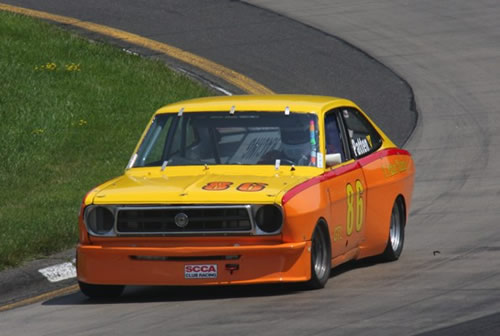
Orange line Datsun 510 BRE Spook

Our “Orange Line”  is a wet lay-up process that uses a gelcoat finish and fiberglass in a polyester resin. It is the type of construction most shops sell when they sell a fiberglass part. The mold is first coated with orange colored gelcoat and then 1 to 2 layers of woven fiberglass are placed with the weave at oblique angles to provide added strength.  This is backed up with 2 to 3 layers of fiberglass mat to provide the needed stability and proper strength.  The component is then allowed to cure before being removed from the mold.  The inclusion of woven fiberglass adds strength and lightness to the part.

Most of the gelcoat/fiberglass parts sold today are constructed using only fiberglass mat or chopped fiberglass to reduce cost.  An all mat or chopped fiberglass process requires the part to be thicker and heavier to reach the same strength as we achieve by using both woven and fiberglass mat in our parts.  One drawback with the wet layup process using mat is the inner surface of parts tends to be more uneven than parts made of all woven materials.  They will likely require some additional time fitting a wet layup part where the inner surface contacts the mounting surface because of the unevenness.


Fiberglass/Epoxy

FG/Epoxy Datsun 510 BRE Spook

The Fiberglass/Epoxy process produces a part lighter in weight, more uniform in thickness and stronger in construction than one made with the wet layup process. 

This process does not use a gelcoat layer or polyester resin, but epoxy resin.  We use only woven s-glass (structural grade fiberglass) in this construction.  The woven fiberglass is fully wet out with epoxy resin and placed directly into the mold without using gelcoat.  Each layer is placed one at a time with the weave angled to the previous layer for added strength.  5 to 6 layers of woven fiberglass are used to provide the required strength.  After the wetted fiberglass has been placed into the mold a removable peel sheet and an absorption fabric are placed over the entire surface of the part.  Then the mold is bagged and a vacuum line is attached to the bag.  The mold, in its sealed bag is now placed under negative pressure while the resin is still in an uncured state.

When “wetting out” the fiberglass material before placing it into the mold it takes more resin than is structurally required to coat all the surfaces of the fibers.  By placing the mold and uncured component under negative pressure the excess resin is pulled from the part and captured in the absorption fabric.  Before the component is fully cured, the mold is removed from the bag and the absorption fabric/peel sheet is removed from the part along with the excess resin.  The actual part is then left in the mold to further cure. 


Carbon Fiber/Epoxy

CF/Epoxy Datsun 510 BRE Spook

Our carbon fiber parts are nearly 50% lighter than a fiberglass one made using the same process.

This process is exactly the same as the Fiberglass/Epoxy process except the fiberglass material is replaced with woven carbon fiber fabric.  The advantage of woven carbon fiber is in its strength.  Carbon fiber is no lighter than fiberglass, but because of its superior strength less layers and less overall resin are used to make an equally strong part. 

Any component we make with carbon fiber is done in 3 layers as opposed to 5 to 6 layer of woven fiberglass, thus the carbon fiber part is nearly 50% lighter than a fiberglass one made using the same process.

Finish and Finishing of FutoFab Parts – (Please read before painting any FutoFab component) 

Gelcoat Finish (Orange Line) Parts: The Orange Line products are made using a gelcoat finish. Gelcoat is essentially colored polyester resin and has very limited strength. It is used as a surface layer to reduce imprinting, a condition where the composite fabric pattern is actually visible in the part’s surface texture. Gelcoat is applied to the mold and is allowed a curing time before the fiberglass/resin is placed into the mold. Gelcoat does a very good job of reducing imprinting and speeds the finishing process of the final product, but it does have its drawbacks. Gelcoat, because of its low strength will tend to surface crack over time if applied in too thick a layer. Also because of its low strength, few benefits are gained other than simplifying the finishing process. FutoFab is quite conscious of the problems of using too much gelcoat and tries to err on the side of caution by applying as thin a layer as possible. Your gelcoat on a FutoFab part may not appear as a solid layer because of our thin application technique. We feel a little extra time and effort to spot putty over any of the small areas of imprinting that may occur is better than having a heavy gelcoat layer that will look great initially but generate spider web surface cracks after a few years of use. 

                 Gelcoat Pros & Cons

                                Pro – Provides a part surface that is quickly prepared for painting
                                Pro – Virtually eliminates fabric imprinting on the surface

                                Con – Adds weight to a part without adding any significant strength
                                Con – Can be the cause of spider web surface cracking if applied too heavily


FG/Epoxy and CF/Epoxy Parts: FutoFab constructs both our fiberglass/epoxy and carbon fiber/epoxy parts with the same technique. These parts are laid-up in the mold without a gelcoat layer. A thin layer of epoxy resin is applied to the mold and then the layers of composite fabric, wet out with epoxy resin are placed into the mold. This process creates lighter parts because only the structural components are used in the fabrication. The final product as it comes from the mold has a satin sheen finish from the cured epoxy resin. One drawback of not using gelcoat is the composite fabric will imprint on the surface of the product. This becomes more pronounced when the surface is finished with high gloss paint. To eliminate the imprinted fabric texture it is necessary to either apply a high build-up, sandable primer and/or thin coat(s) of spot putty on the exposed surface. This adds time to the preparation process, but eliminates all the issues that using a gelcoat finishes can create.

                 FG/Epoxy – CF/Epoxy Pros & Cons

                                Pro – Provides a lighter component weight by not having a gelcoat layer
                                Pro – Eliminates any potential of spider web surface cracking caused by gelcoat

                                Con – Parts will exhibit imprinting of the composite fabric in the surface
                                Con – Additional steps and time are added to the preparation process when finishing


All Products - Mold Release Compounds on Finished Products– Make Sure it is Removed!

All composite parts use a release compound to keep the newly created part from bonding to the mold. These are generally a carnauba wax based product. When finishing any product, all contaminants must be removed from the surface before any preparation is started otherwise finishes (paint) may not properly bond to the surface. FutoFab recommends using acetone to thoroughly wipe and clean all of its products before starting any finish preparation. This will remove the mold release compound and any contaminants left from handling parts.


Placing an Order

In order to provide you with a final quote, please contact us and be sure to include the parts, quantity, type of construction (fiberglass, CF, etc) and a shipping address.  With this information we will be able to provide you with an accurate quote and delivery time.  We accept Paypal payments.  Paypal will allow you to use a credit card as payment. 

 
Joomla 1.5 Templates by Joomlashack